Here is the same Arduino task, now with a lovely and bright LED attached to the board.
Hello World 2 from Tami on Vimeo.
Here is the same Arduino task, now with a lovely and bright LED attached to the board.
Hello World 2 from Tami on Vimeo.
I played around with my Arduino board. Below is a video of the LED blinking “Hello World” in Morse Code.
I started by translating “Hello World” into Morse Code using this handy translator.
” …. . .-.. .-.. — / .– — .-. .-.. -..”
Next, I wrote out digitalWrite commands for each dot and dash of each letter. I set for dots to blink on for 300 miliseconds, dashes to blink on for 1000 miliseconds, breaks between characters within a word to blink off for 300 miliseconds, and breaks between words to blink off for 2000 miliseconds.
Check out the video.
Original Code –
Easier, more functional code
Liz and I explored some more today, following our leads from last week. We ventured to 1165 Broadway where we were told was the place to find the whole of NYC’s “I heart NY” shirt supply. The address ended up being a doorway leading to a creepy hallway and elevator, and the local vendors were less than happy to welcome us into the warehouse. Later we were able to take a closer look at some of the shirts and we will continue to research where all of the materials and labor come from.
Teaser video.

Liz and I chose to document the iconic “I love NY” t-shirts for this project. The shirts are probably the top souvenir choice of New York City tourists. We think the shirts will be interesting to research because it seems as though everyone has one. Where do they come from? We plan on going to touristy areas around the city to document and film the vendors selling and the people wearing/buying them. Afterwards we plan on doing some research to attempt to discover the origin of the materials and labor used to make them.
Ring Jax
A two player game of chance and blind skill.
1. Player 1 is blindfolded.
2. Player 1 chooses two jax pieces.3. Player 2 tells Player 1 the color and related actions of picked jax.
Red – spin
Spin around in a circle 4 times, then complete action #2.
Orange – throw
Throw the ring onto the shark’s nose. Should always be action #2. Two chances.
Green – sit
Player 2 will place one of the rings behind Player 1. Player 1 must sit on the ring without using their hands.
Purple – catch
Player 2 will throw one of the rings to Player 1. Player 1 mustcatch the ring.
4. Player 1 attempts actions.
5. Player 2 helps Player 1 accomplish actions by giving them verbal cues.
6. If Player 1 accomplishes both actions, they receive 5 points.
7. Player 1 and Player 2 switch turns. The first player to earn 15 points is the winner!
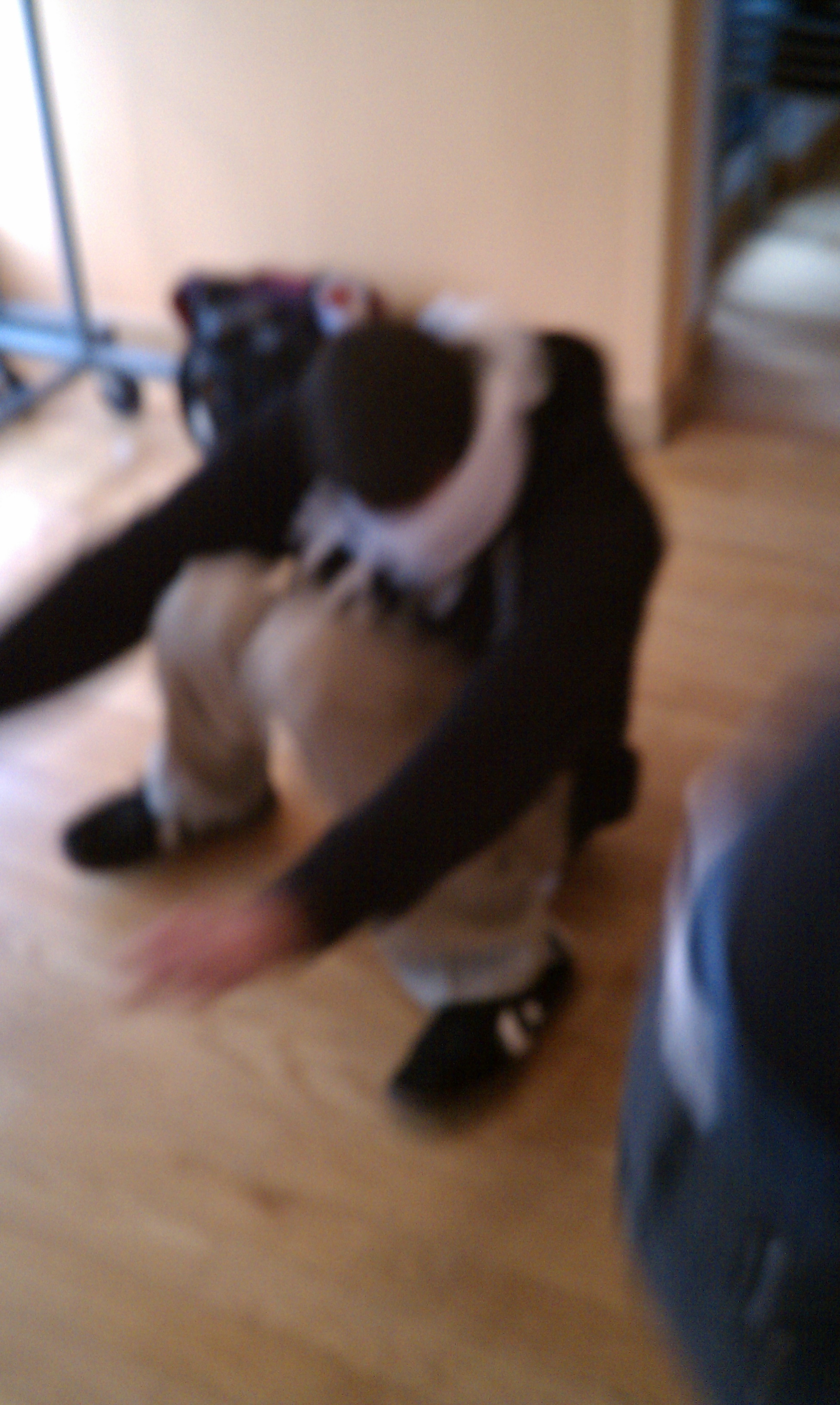
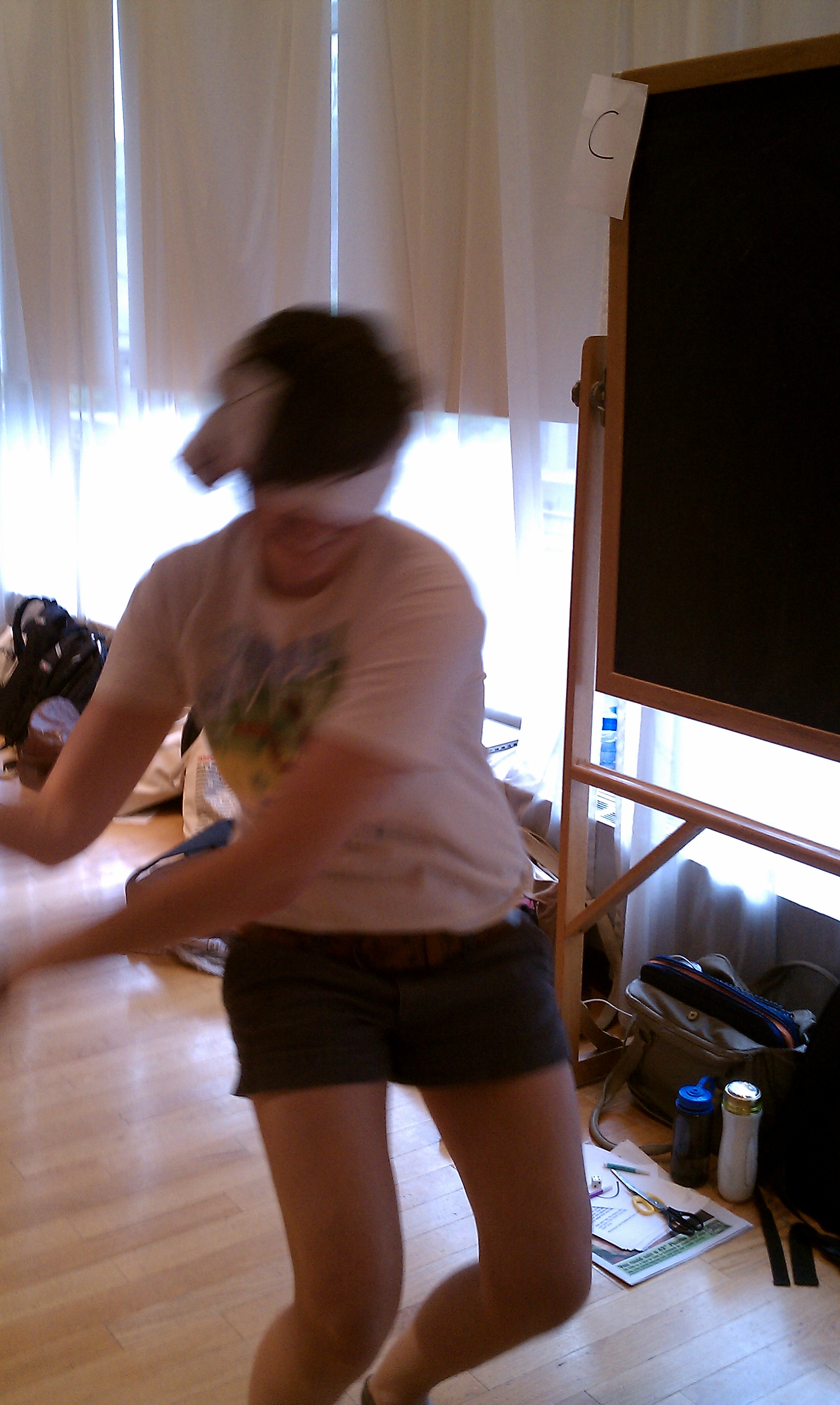
Today we played this game with students of all the Design sections. It was really fun to see what other groups had come up with and how they utilized their parameters and props. Ring Jax ran fairly well on its own. Participants were more than capable of figuring out the directions on their own and overall they admitted to having fun while playing.
We realized after this exercise that Ring Jax works best as a spectator game, meaning that it is more fun to watch blindfolded people do silly things than it is to be blindfolded and doing silly things. In the future, if Ring Jax is ever played again, we would like to add more colors and actions and to make sure that each combination of actions has a defined combined-action.
Exquisite Corpse exercise
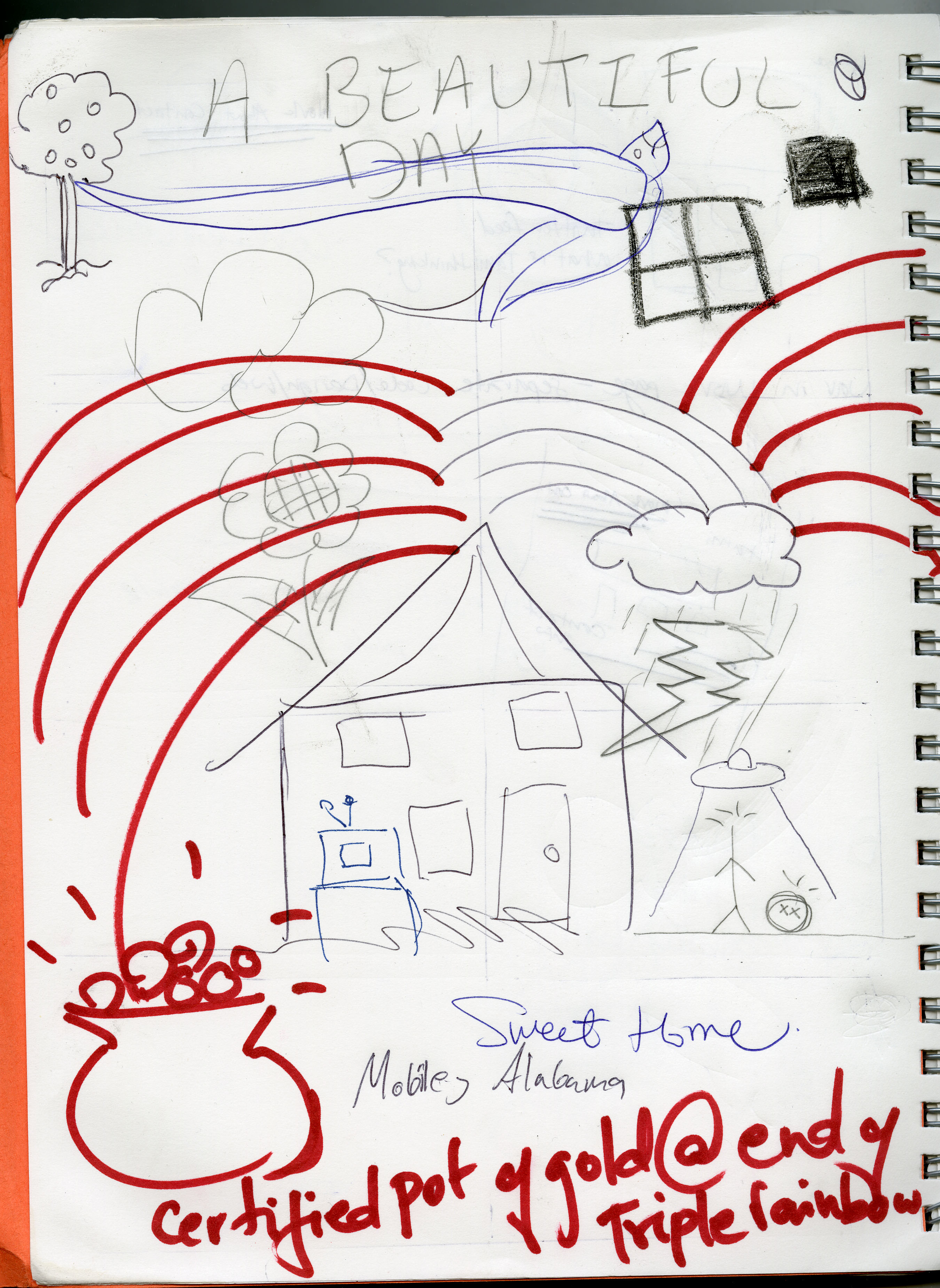
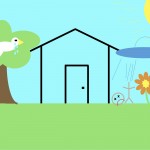
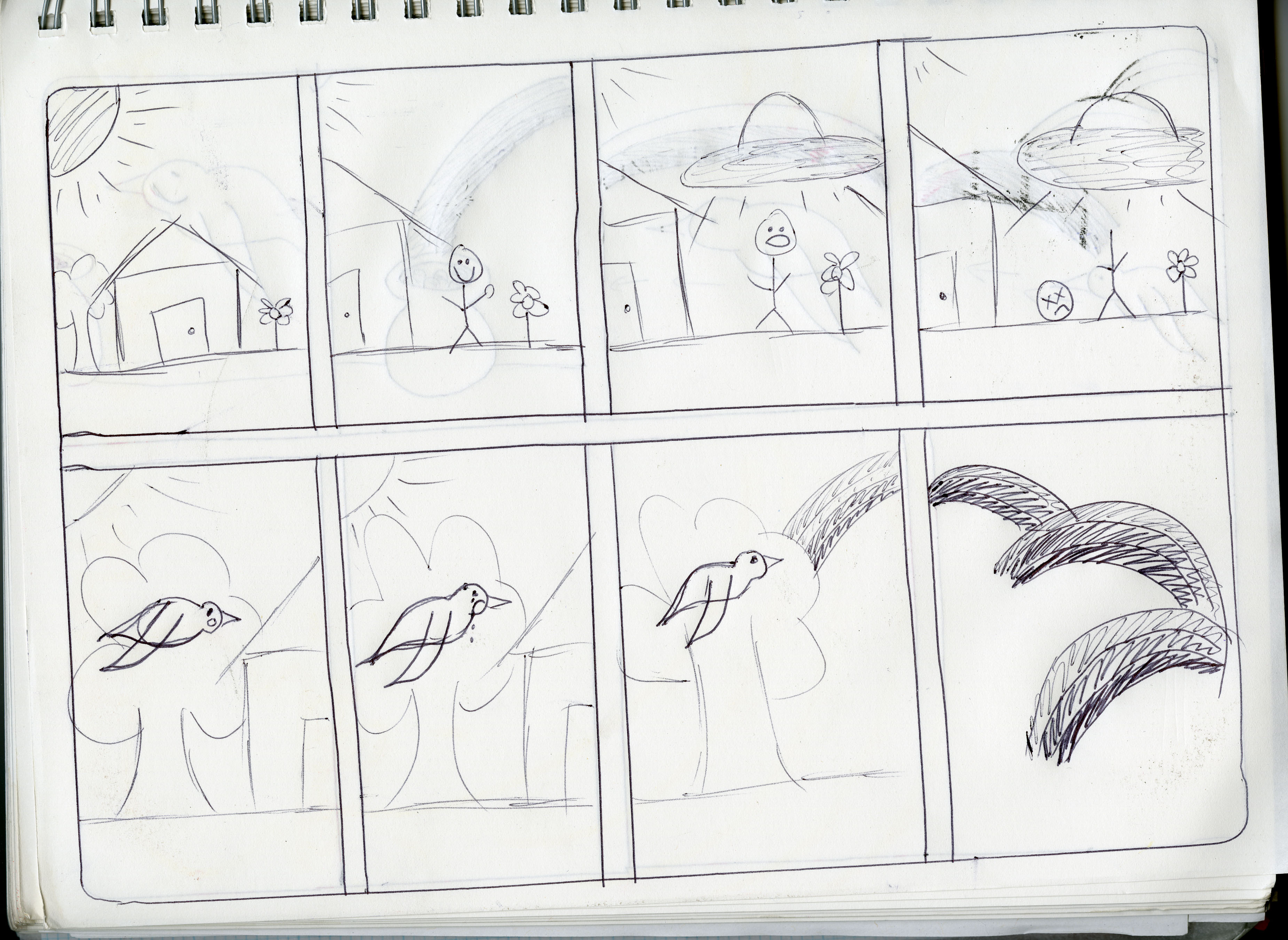
It was a beautiful day in Mobile, Alabama. Joe was at home when he decided to go for a walk outside and enjoy the pleasant weather, the beautiful flowers on the ground, etc. Suddenly, a space ship flew down from the sky and beheaded Joe. Oh no!
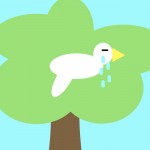
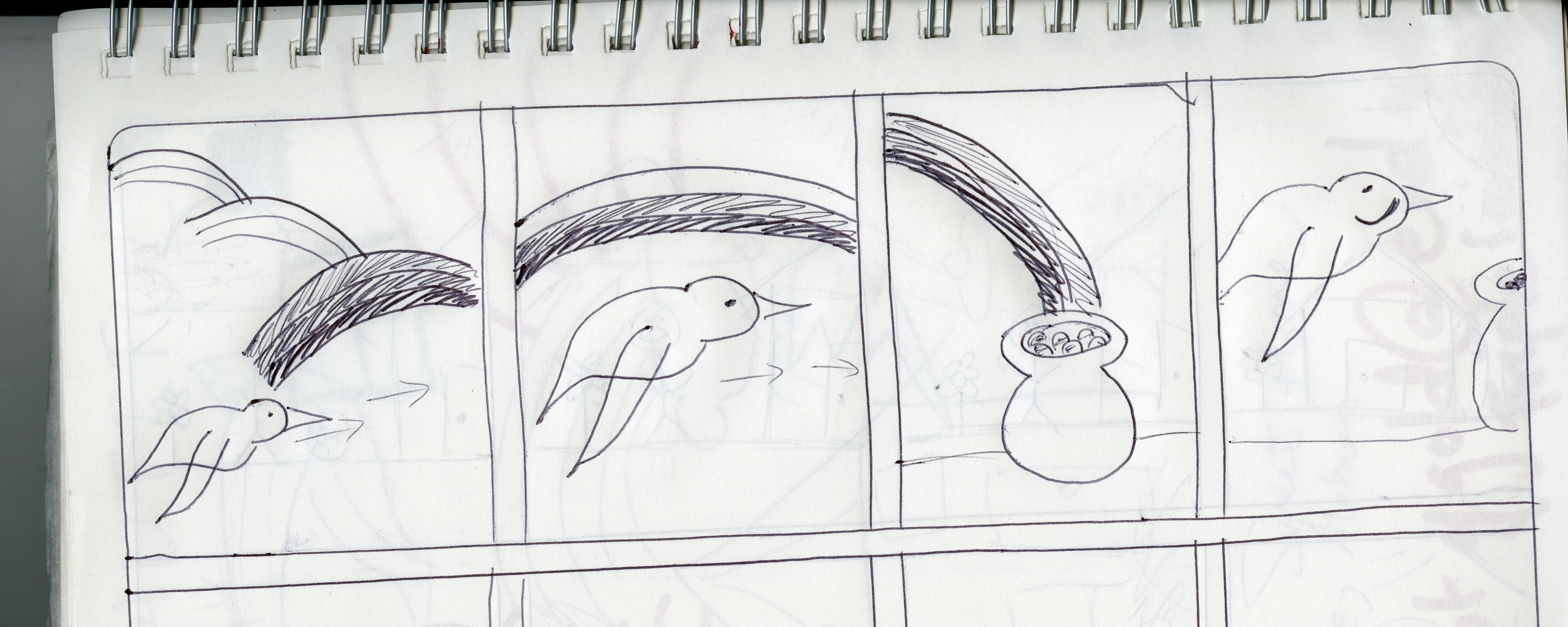
A dove, named Dove, ironically, was sitting in a nearby tree and witnessed the whole ordeal. Saddened by the loss of his friend Joe, Dove needed to find his inner happiness in order to end his grieving. He looked up into the sky and saw not a single, not a double, but a triple rainbow! He followed the triple rainbow from one end of the sky to the other and soon found the certified pot of gold at the end of the triple rainbow. This brought him happiness. The memory of Joe will live on through the triple rainbow.
Hug Hunt
Objective: To spread peace and joy to others by giving random hugs. This interactive game is meant to be played and spread throughout the real world.
1. A hug that is accepted by the other person = +1 point.
2. A hug that is rejected = -1 point. But, if you resolve the inner turmoil of the recipient = +2 points.
3. A sneak attack hug = +3 points.
4. High-five = +1/4 point.
The cards we pulled to create this game were “Manhunt” and “Peace”. I had never heard of the game Manhunt before, but it was described as a very violent one, where players sneak up on each other and then beat each other. Getting the Peace card could have definitely thrown us for a loop, but instead, we were able to just flip the game to its complete opposite and make it about peace. Hugs instead of beatings was a great trade.
(Hug Hunt created by T.Evnin, C.Piuggi, & B.Putz.)
Tic-Tac-Toe
1. A hash mark is made by drawing two parallel horizontal lines, overlapped by two parallel vertical lines. 9 empty spaces are created.
2. Player 1 draws an X into one of the empty spaces.
3. Player 2 draws an O into one of the empty spaces.
4. Repeat steps 2-3 until three consecutive X’s are in a row (or column or diagonal), or three consecutive O’s are in a row.
Thinking about this simple, childhood game in such a precise manner made the game sound so much more complicated than I remember it being. Trying to remember how the game was explained to me as a child is impossible, but it must have been in simpler terms.