February 15, 2011 0

Reading Thoughts – 2/15

By in Major Studio: Interactivity, Spring 2011

  1. Bodystorming
    by Gamestorming
  2. Bodystorming is yet another iteration of the same idea that weaves all of this week’s readings together: immersing yourself in a new environment and getting your hands dirty in research can help you to come up with new ideas. It is like doing a brainstorm with your brain and your hands, in order to understand a design scenario not only as a designer, but as a user. I like that this reading included a video example of a group doing a bodystorming session. While I am happy all of the readings this week gave solid examples and instructions for process, I think each activity runs organically in practice. All of these techniques can be employed when doing research for a project, but they all must be adjusted for a particular setting, project, user group, design team, etc.
    Read the rest of this entry »

Tags:

February 13, 2011 0

Reading Thoughts – 2/10

By in Major Studio: Interactivity, Spring 2011

  1. Urban probes: encountering our emerging urban atmospheres
    by Eric Paulos and Tom Jenkins (2005)
  2. After collaborating on two Instruction Sets for Strangers projects in my Studio last semester, this reading was another interesting take on Urban Intervention. Urban Probes is the technique the authors introduce – “a lightweight, provocative, intervention methodology designed to rapidly deconstruct urban situations, reveal new opportunities for technology in urban spaces, and guide future long term research in urban computing” (341). Thinking about our next Module, concerning Environment: Place and Space, I think this technique will be the most useful for quickly implementing a project in the public domain. Already I am buzzing with ideas about where I want to do research and what type of intervention I want to impose. For example, one question this reading inspired was How do people navigate their way out of a subway station? Using the Urban Probes technique, I could pick a subway station and observe people leaving for an hour or so, implement a quick intervention, observe user reactions to that intervention, and then come up with a more developed project to create.

    Read the rest of this entry »

Tags:

February 10, 2011 0

Module I: The Designed Object

By in Major Studio: Interactivity, Spring 2011

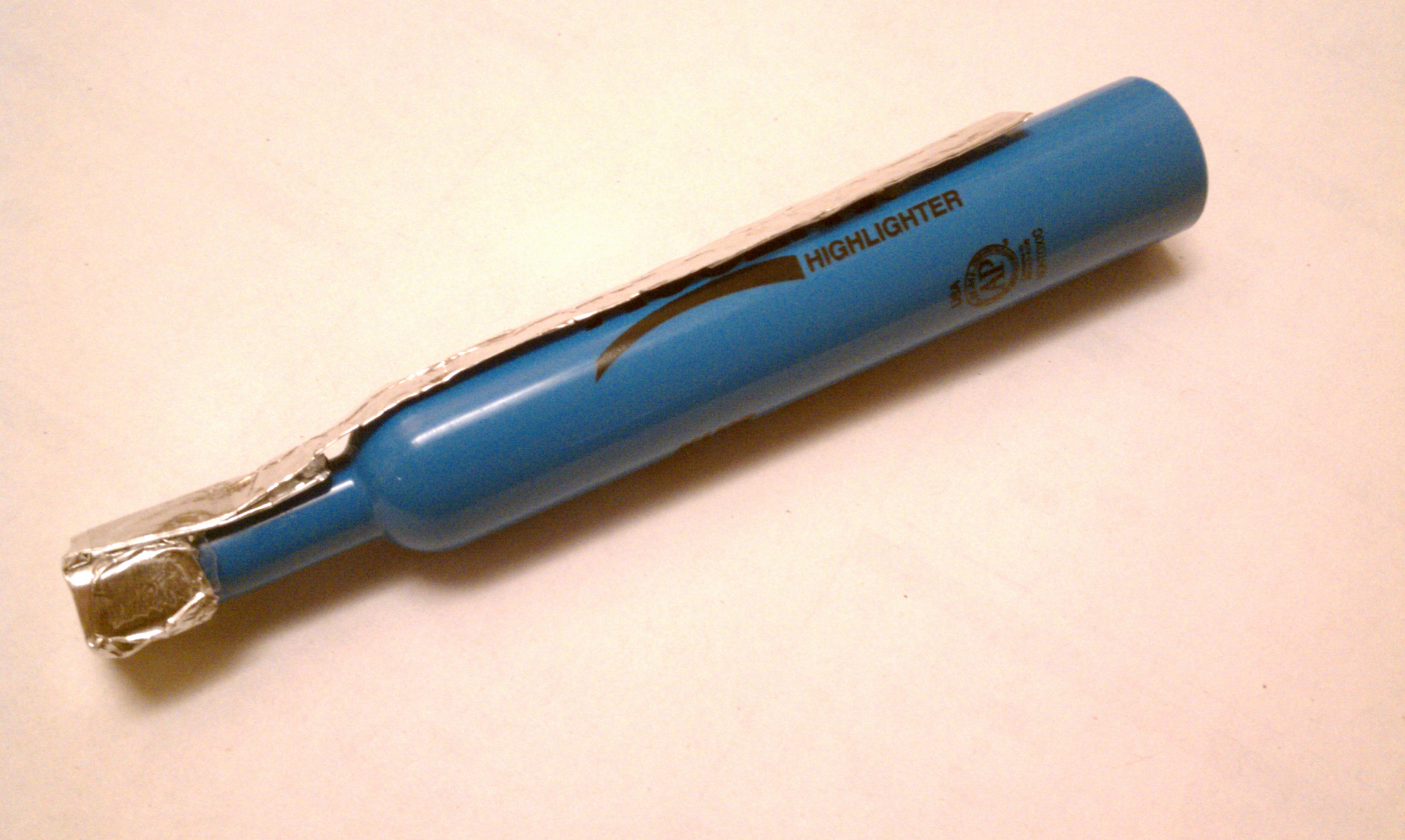
escribo© is an extension to make any pen or art tool compatible with a tablet device. Below are pictures of the first prototype, attached to a highlighter and pen.


Read the rest of this entry »

Tags: ,

February 8, 2011 0

Interaction Relabeling

By in Uncategorized

Today in class we relabeled everyday objects using the techniques we read about in Interaction Relabelling and Extreme Characters, by Djajadiningrat, Gaver, and Frens. I brought in a laser leveler.

My group began by going around and explaining the original functions and affordances of our objects. Focusing on the original functions helped to see what natural affordances the object’s pieces encouraged and how they could be reinterpreted for new functionality. Listed below are the ideas my group came up with for relabeling the laser leveler.

Back Scratcher

The measuring tape was begging to be pulled out of its casing, and a hole in the leveler made for a perfect hand grip. Added together, a user can hold the main body of the object over their shoulder and then use the protruding tape measure to scratch their back.
Read the rest of this entry »

Tags: ,

February 6, 2011 0

Objectified

By in Major Studio: Interactivity, Spring 2011

objectified_movie_poster

“Objectified is a feature-length documentary about our complex relationship with manufactured objects and, by extension, the people who design them.”

I watched this film today at the suggestion of a friend and think that it is filled with interesting concepts and inspirations for our first Module. I found that the ideas really solidified what we read for Major Studio: Interaction for February 1, and most specifically the Csikszentmihalyi “Why We Need Things” reading – how objects define us, how they communicate ideas or politics or affordances, how we as designers express a thought in a design, and how users “listen” to designers and become changed as a result.

If you have Netflix you can instant-watch it right now!

Tags: ,

February 2, 2011 0

Reading Thoughts – 2/3

By in Major Studio: Interactivity, Spring 2011

  1. Interaction Relabelling and Extreme Characters
    by Djajadiningrat, Gaver, and Frens
  2. Aesthetics of interaction moves the focus from ease of use to enjoyment of the experience (1).”

    This reading provided some good case studies in two usability design techniques: interaction relabeling and extreme characters. While the extreme characters technique would probably also serve as a useful exercise, I am not sure if its power to cast user groups in a negative light would outweigh its power to provide useful insight. Interaction relabeling definitely seems like a technique that would provide great design insight, and would be fun to do! It would have been useful for the authors to provide more instructions for how the exercise can be most successful, since I was left with a few questions. Which object does a designer begin with: the object that they wish to rethink or the replacement object? Would any object do as a replacement?
    Read the rest of this entry »

Tags: , ,

February 1, 2011 0

Pecha Kucha: Domain Map

By in Major Studio: Interactivity, Spring 2011

For our first in class assignment, we each took some time to create a domain map of things that interest us. This Pecha Kucha style presentation is meant to express the mind map I created, as well as the future direction my projects will potentially take based on my interests. The full presentation can be viewed/downloaded by clicking the picture below.

Tags: , , ,

February 1, 2011 0

Design Inspiration

By in Spring 2011

It is only the second day of classes of the new semester, yet I am already finding my classes to be exciting and the prospect of what I am going to learn inspiring. One inspiring project I have stumbled upon in researching interesting things going on in the world of design and technology is Conductor, by Alexander Chen. This work-in-progress is a program/app/piece that visualizes and audio-izes the complicatedly beautiful NYC Subway system using SVG, HTML5, and JavaScript. The dynamic map will one day create a live performance of the subway schedule, hopes the artist, but for now it is just a sample video performance that I find interesting and inspiring. While the NYC Subway map is already useful and detailed, this project will allow the connections between the subway lines to be more apparent, interesting, and exciting. It could even be fun for riders to be able to record the musical sounds of their subway journey. Click the link above to see the artist’s project page, or check out Creative Applications Network’s coverage.

UPDATE: The artist has coded the piece to playlive subway data. Looks great!

Tags: , , , , , ,

January 31, 2011 0

Reading Thoughts – 2/1

By in Major Studio: Interactivity, Spring 2011

  1. “Why We Need Things” excerpt from History From Things: Essays on Material Culture
    by Mihaly Csikszentmihalyi
    Edited by Steven Lubar and W. David Kingery
  2. Our dependence on objects is not only physical but also, more important, psychological. Most of the things we make these days do not make life better in any material sense but instead serve to stabilize and order the mind (22).”

    This reading suggests that humans are stabilized by the objects around them. On a personal level, an experience with an object can help to “focus attention, reducing entropy in consciousness” (25) and thus add to the richness of one’s experiences. Objects can also serve as “concrete reminders of life that otherwise would run the risk of getting lost in the labyrinths of memory” (26). These ideas provide an interesting perspective of how humans self-identify because it seems that we would be lost without the many objects we collect throughout our lives. Perhaps these days we experience the world more richly because the vast number of objects we accumulate add layers of detail and definition to our lives.  There are also important social considerations related to owning objects. The reading suggests that human desires to present one’s identity influenced the development of technology more so than the desire for survival. This definitely rings true today, as consumers flock to stores to buy the new hip gadget, many times for the sake of vanity. Our lives are defined by our relationship with people and objects, but also by our relationship with people through objects.  In order to be freed from our dependence on objects, we must become adept at using symbols instead of real things. It is important for us, as designers, to be smart in the objects or symbols we produce so as not to add to the cognitive clutter of our users, but to help them find order of the mind.
    Read the rest of this entry »

Tags: ,

January 26, 2011 0

Reading Thoughts – 1/27

By in Major Studio: Interactivity, Spring 2011

  1. Interaction Design History in a Teeny Tiny Nutshell
    Marc Rettig
  2. This presentation shares a quick timeline of principles of modern day computing that have evolved over time. The first principle operate the machine treated users as components in the production system and cared only about the usefulness of the machine. With the invention of the mouse by Doug Englebart in 1954 and Sketchpad by Ivan Sutherlath in 1963, the computing paradigm shifted toward the principle of use the software. This principle treated computers as a platform for a function and the users as important manipulators of content. The next shift was toward the principle of perform a task, which focused on the users’ pleasure in using a computer and smart software design. The most current principles are experience and connect, where we see the importance of interaction design at the forefront of our computing. Finally, the future of computing is moving toward the principle of dynamically enabled, where content will be constantly streaming and updating to allow more relevant real-time experiences.

    This presentation was engaging and interesting, mostly because it offered a perspective on interaction design that differed from the other readings for this week. The author, or I guess, presenter, was able to clearly explain how our users’, engineers’, and designers’ roles have changed computer innovation in the last 50 years as well as how their roles have been changed because of these innovations. Although it has only been about 7 years since this presentation was first shared, it seems as though we have already entered what Rettig considers the future. We are seeing more and more dynamic content in such forms as news feeds and Twitter, and I think content and content management will continue to become more dynamic.

    Read the rest of this entry »

Tags: , ,

December 17, 2010 0

Web Design 2: Official Launch

By in Fall 2010, Web Design 2

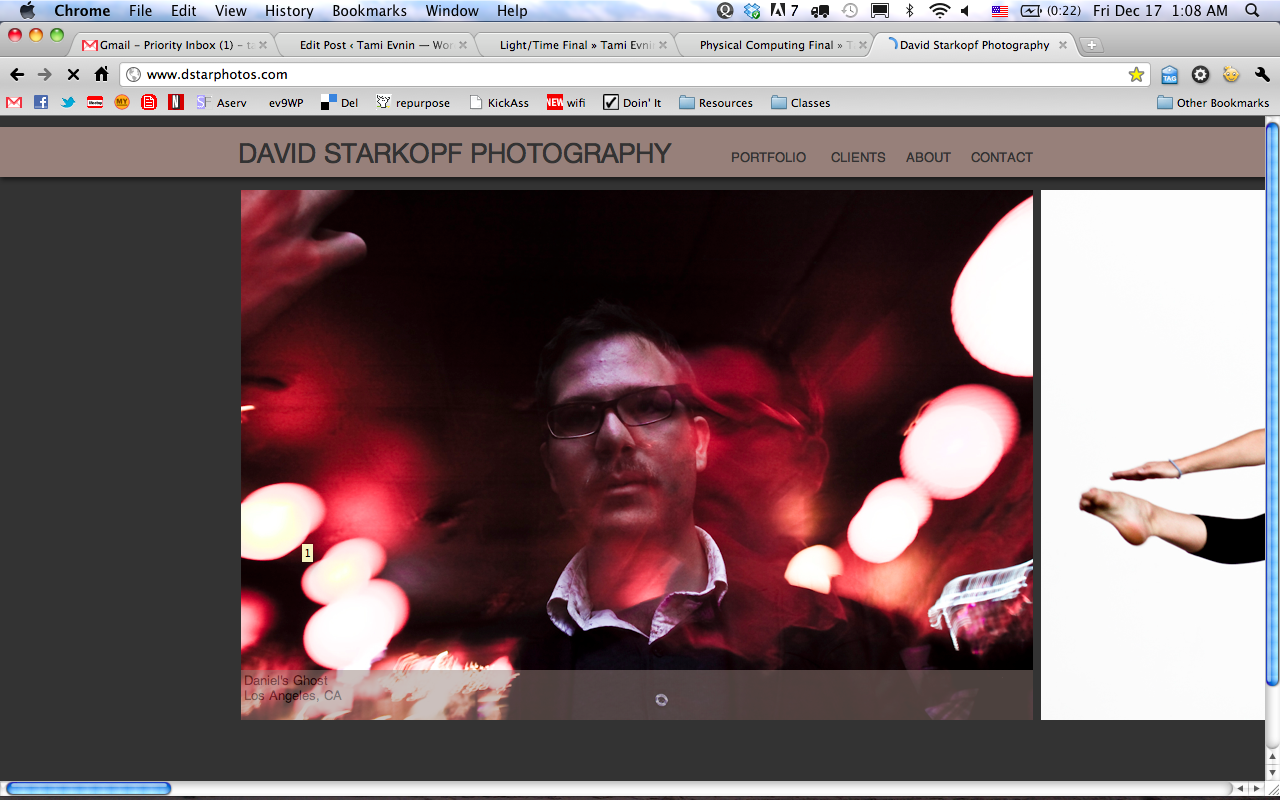
Check out the website I designed for my Web Design 2 course. I officially launched the site on my client’s domain! It is not completely finished or optimized for every browser, but I am excited to share it with others finally.

Introducing David Starkopf Photography dot com!

Tags: , ,

December 17, 2010 0

Physical Computing Final

By in Fall 2010, Physical Computing 1

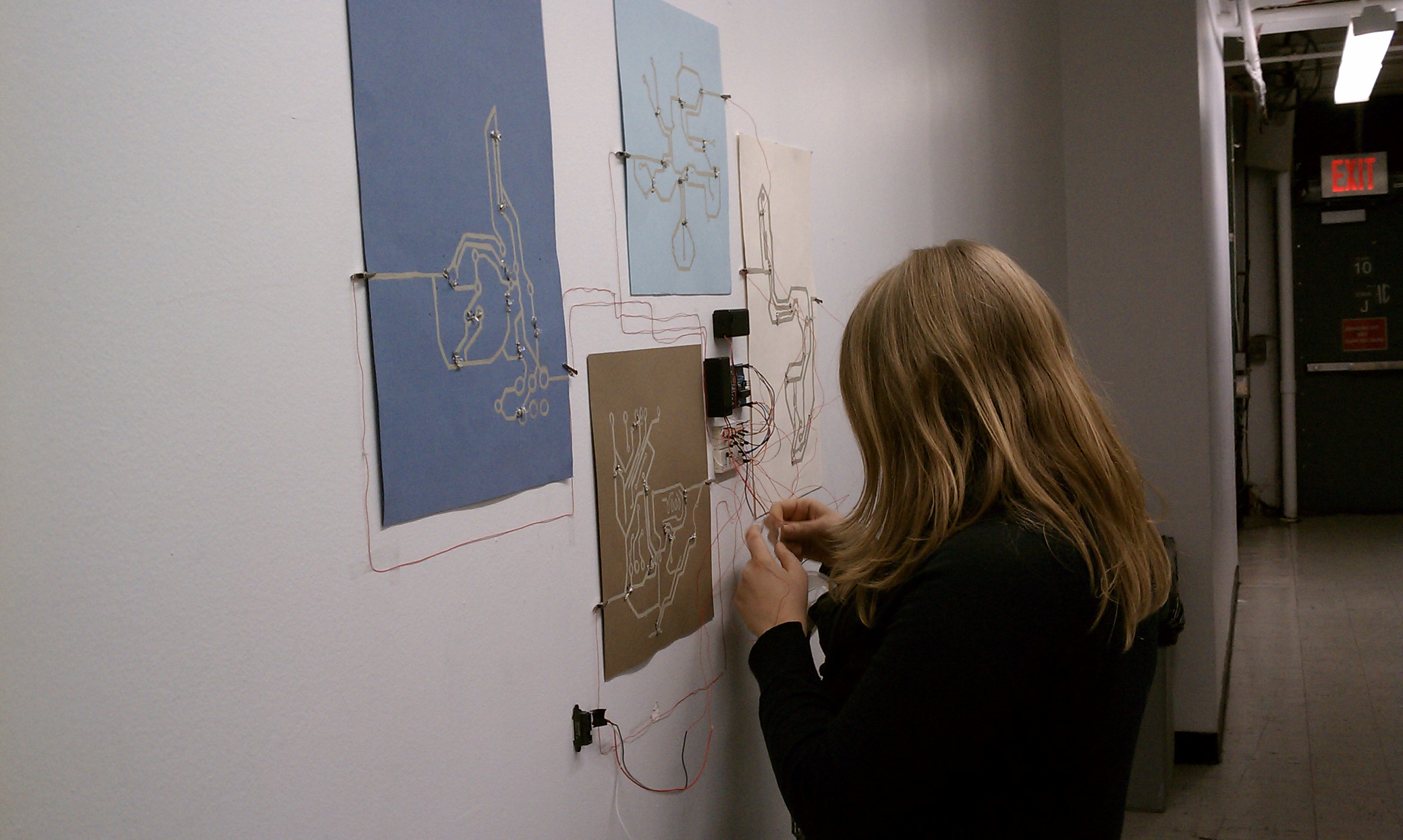
Liz and I finally finished our Physical Computing final project, Painted Circuits. Please see our code, as well as my previous process posts (initial idea, traces, progress 1, progress 2).

This art piece was created to decorate the home of an electronically savvy person. Through the exploration of conductive paint and the often overlooked beauty of circuitry, we created artwork that can also serve as a nightlight to light your path in the dark. Considering calm technology, this is a useful tool that captives your immediate attention as an art piece, but functions as a tool at your periphery. The functionality serves to add to the aesthetic qualities of the artwork.

The distance sensors sense the direction that a user walks past the piece and lights the way.

hanging up our work


Read the rest of this entry »

Tags: , , ,